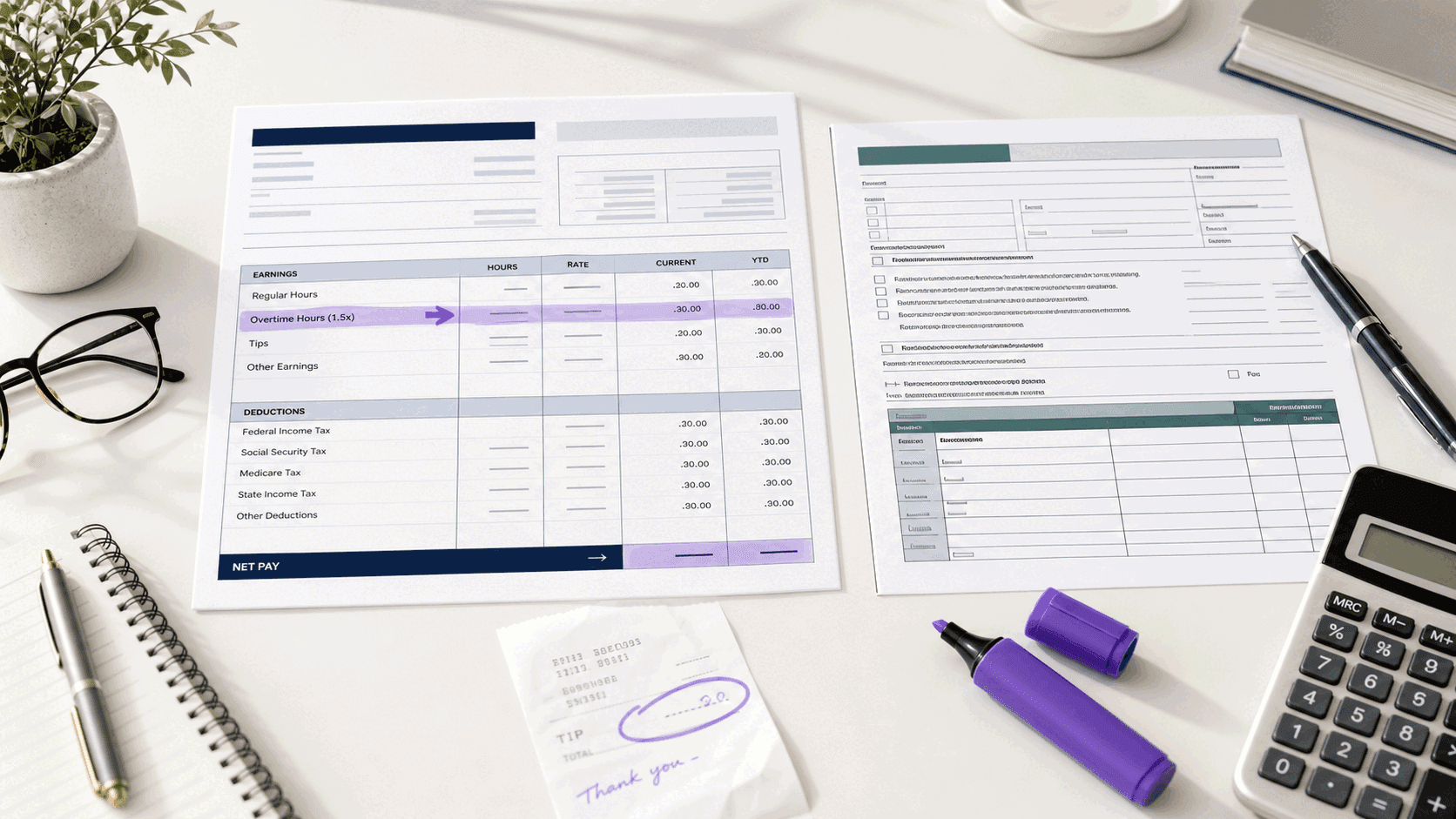
Short answer: 2026 is the first year in a long time that a charitable gift saves tax without itemizing. If you take the standard deduction, cash gifts to qualifying charities made by December 31, 2026 are deductible up to $1,000 ($2,000 for a married couple filing jointly), worth $220 to $440 in the 22% bracket. If you itemize, a new floor makes the first 0.5% of your AGI in gifts non-deductible, and in the 37% bracket a deduction is now worth at most about 35 cents on the dollar.
These rules come from the One Big Beautiful Bill Act of July 2025, and they change the year-end playbook. "Bunching" two years of gifts into one, the standard advice since 2018, now pays far less for most givers, while giving appreciated stock and, at 70½ or older, giving straight from an IRA matter more. With Giving Tuesday on December 1, this guide works out what each choice saves in 2026.
Who this is for: US taxpayers deciding how and when to give before the end of 2026. What it does not cover: business and corporate giving, private foundations, charitable trusts and state tax rules. This is general information, not tax advice; a large or complex gift is worth a conversation with a tax professional.
What changedThe three new rules for 2026
Non-itemizers can deduct cash gifts
From tax year 2026, up to $1,000 ($2,000 joint) of cash given to qualifying public charities, on top of the standard deduction. Gifts to donor-advised funds and supporting organizations do not count, nor do clothing, stock or other property.
Itemizers lose the first 0.5% of AGI
Only charitable gifts above 0.5% of your adjusted gross income are deductible. At $150,000 of AGI, the first $750 of gifts saves nothing.
Top-bracket value capped near 35%
For taxpayers in the 37% bracket, itemized deductions are limited so they are worth about 35 cents per dollar instead of 37.
The 60% cash limit is permanent
Cash gifts to public charities can still be deducted up to 60% of AGI when you itemize; the excess carries forward five years.
The IRS summary of the law confirms the non-itemizer deduction, its dollar limits and its exclusions: it starts with tax year 2026, donor-advised funds and supporting organizations do not qualify, noncash gifts do not qualify, and carryovers from earlier years cannot be used (IRS, One Big Beautiful Bill provisions). The floor, the 35% cap and the permanent 60% limit are summarized by the Tax Foundation, which estimates the non-itemizer deduction at about $74 billion of tax cuts over ten years and the floor at about $63 billion of tax increases.
If you take the standard deductionWhat a gift saves
Most households take the standard deduction, which is $16,100 for single filers and $32,200 for married couples filing jointly in 2026. Until now their gifts saved nothing. The new deduction is worth the gift times your top tax rate, up to the cap:
10%
- Single: $1,000 gift
- $100
- Joint: $2,000 gift
- $200
12%
- Single: $1,000 gift
- $120
- Joint: $2,000 gift
- $240
22%
- Single: $1,000 gift
- $220
- Joint: $2,000 gift
- $440
24%
- Single: $1,000 gift
- $240
- Joint: $2,000 gift
- $480
| Your top bracket | Single: $1,000 gift | Joint: $2,000 gift |
|---|---|---|
| 10% | $100 | $200 |
| 12% | $120 | $240 |
| 22% | $220 | $440 |
| 24% | $240 | $480 |
Source: CalculatorAI arithmetic; caps from the IRS One Big Beautiful Bill provisions page; calculatorai.app
Share / download
Your 2026 bracket is set by taxable income: for a single filer, 22% covers taxable income from $50,400 to $105,700 (2026 brackets are in our brackets guide next to 2027's). Giving more than the cap is still generous; it just saves no more tax.
If you itemizeThe 0.5% floor in practice
Itemizers keep the full deduction above the floor. The floor only bites on the first slice:
AGI $150,000, $5,000 of gifts, 24% bracket
The floor is 0.5% × $150,000 = $750. Only $4,250 of the $5,000 is deductible. Under the old rules the whole $5,000 counted.
At high incomes both new limits apply. A couple with $1 million of AGI giving $50,000 loses the first $5,000 to the floor and, in the 37% bracket, gets about 35 cents per dollar on the rest: roughly $15,750 of tax saved instead of $18,500 under the old rules. Our figure applies the cap as a flat 35% rate; the statute's formula is more involved, so treat it as an approximation.
BunchingWhy the old trick pays less now
Bunching means giving two or three years of donations in one year so your itemized deductions clear the standard deduction, then taking the standard deduction in the off years. The new non-itemizer deduction makes the off years worth something, and the floor trims the bunched year, so the arithmetic changes.
- Give $6,000 a year, 2 years$880$880
- Bunch $12,000 into one year$176$176
- Give $6,000 a year, 3 years$1,320$1,320
- Bunch $18,000 into one year$1,496$1,496
Values: $ of tax saved
Show these figures as a table
| Value ($ of tax saved) | |
|---|---|
| Give $6,000 a year, 2 years — $880 | $880 |
| Bunch $12,000 into one year — $176 | $176 |
| Give $6,000 a year, 3 years — $1,320 | $1,320 |
| Bunch $18,000 into one year — $1,496 | $1,496 |
Source: drafts/charitable-donation-tax-deduction-2026-numbers.mjs; CalculatorAI analysis · calculatorai.app
Share / download
For this couple, giving every year and taking the $2,000 non-itemizer deduction saves $880 over two years; bunching two years into one saves $176, because $22,000 + $12,000 − the $1,000 floor only just clears the $32,200 standard deduction. Bunching three years edges ahead, by $176. The rule of thumb now: bunch only if the bunched year clears the standard deduction by a wide margin, and run your own numbers in the Tax Refund Calculator before moving a gift between years.
Give stock, not cashWhen you itemize
If you itemize and own investments that have risen in value, giving the shares directly does two things: you deduct the full market value (up to 30% of AGI for appreciated property) and you never pay capital gains tax on the rise. Shares worth $10,000 bought for $4,000 avoid $900 of long-term capital gains tax at 15%, on top of a deduction worth $2,400 at 24%. Selling first and donating the cash would hand $900 to the IRS.
Two caveats. The shares must have been held more than a year, and stock does not count toward the new non-itemizer deduction, so this is an itemizer's tool. If you are harvesting losses at year-end too, give the winners and sell the losers: tax-loss harvesting in 2026 covers the second half of that move, and the Capital Gains Calculator shows the tax you avoid.
Age 70½ and olderGive from the IRA instead
A qualified charitable distribution (QCD) sends money directly from a traditional IRA to a charity. It never counts as income, so it is not affected by the 0.5% floor or the 35% cap, it works whether or not you itemize, and from age 73 it counts toward your required minimum distribution. The limit is $111,000 per person in 2026 (IRS Notice 2025-67).
For a retiree in the 22% bracket who takes the standard deduction, a $5,000 QCD keeps $5,000 out of taxable income, about $1,100 of tax, while a $5,000 cash gift would be deductible only up to the $2,000 joint cap (about $440). Lower income can also keep Medicare premiums and the taxable share of Social Security down. The money has to go from the IRA custodian to the charity directly, and it has to leave the account by December 31 to count for 2026. Required minimum distributions has the rest of the year-end IRA checklist.
Before December 31The year-end checklist
Decide whether you will itemize in 2026
Add mortgage interest, state and local taxes and your planned gifts. If the total is under $16,100 (single) or $32,200 (joint), you are a standard-deduction filer: give cash to public charities, up to the $1,000 / $2,000 cap.
Give cash by December 31 if you are not itemizing
A card charge or a check mailed by December 31 counts for 2026. A gift to a donor-advised fund does not qualify for the new deduction.
Itemizers: give appreciated shares
Ask the charity for its brokerage transfer details early; transfers can take a week or more in December.
Over 70½: use a QCD
Ask your IRA custodian for a qualified charitable distribution paid directly to the charity, and make sure it leaves the account in 2026.
Collect acknowledgments
A written acknowledgment for each gift of $250 or more, and bank or card records for smaller ones.
Where these numbers come from
- The law: IRS "One, Big, Beautiful Bill provisions" page (section 70424: $1,000 / $2,000 non-itemizer deduction from tax year 2026, cash only, excludes donor-advised funds and supporting organizations, no prior-year carryovers). Tax Foundation, "Charitable Deduction Changes in the Big Beautiful Bill" (updated February 3, 2026) for the 0.5% floor, the 35% value cap for the 37% bracket, the permanent 60% cash limit and the ten-year revenue estimates.
- 2026 tax figures: standard deduction $16,100 / $32,200 and federal brackets from IRS Rev. Proc. 2025-32, as stored in the site's tax tables. QCD limit $111,000 from IRS Notice 2025-67.
- Recordkeeping: IRS Publication 1771 (written acknowledgment for gifts of $250 or more).
- Examples: arithmetic in
drafts/charitable-donation-tax-deduction-2026-numbers.mjs. The bunching example assumes 2026 rules in every year, $22,000 of other itemized deductions, AGI $200,000 and the 22% bracket; the 35% cap is applied as a flat rate, which overstates its precision. State income tax, the Medicare and Social Security effects of a QCD, and the 3.8% net investment income tax on gains are not modeled, so the true savings for some readers are higher.
FAQFrequently asked questions
Can I deduct charitable donations if I don't itemize in 2026?
Yes. From tax year 2026, non-itemizers can deduct up to $1,000 of cash gifts to qualifying charities, or $2,000 for married couples filing jointly. Gifts to donor-advised funds and noncash gifts do not qualify.
What is the 0.5% floor on charitable deductions?
From 2026, itemizers can deduct only the part of their charitable gifts that exceeds 0.5% of adjusted gross income. With an AGI of $150,000, the first $750 of gifts is not deductible.
Is bunching charitable donations still worth it?
Less often. Because non-itemizers can now deduct up to $2,000 a year (joint), a couple giving every year keeps a deduction in each year. In our example, giving $6,000 a year saved $880 over two years, while bunching $12,000 into one year saved $176.
Do donor-advised fund contributions count for the new deduction?
No. The IRS says donations to donor-advised funds and supporting organizations do not qualify for the non-itemizer deduction. They remain deductible for people who itemize.
What is the QCD limit for 2026?
$111,000 per person, per IRS Notice 2025-67. A qualified charitable distribution from an IRA is excluded from income, counts toward required minimum distributions from age 73, and is available from age 70½.
The move to make this month
If you take the standard deduction, give the first $1,000 (or $2,000 as a couple) in cash, to a public charity, by December 31, and keep the receipts. If you itemize, give appreciated shares instead of cash; if you are 70½ or older, give from the IRA. Then check the effect on your refund in the Tax Refund Calculator.