
Trading11 min
Topstep Trading Combine Rules: How to Track Consistency and Avoid Violations
Topstep’s $50K Combine has a $2,000 trailing loss limit and a 55% consistency target. See the real risk budget, formulas and journal fields.
Sep 12, 2026Read
Nous utilisons des cookies pour vous garder connecté. Politique de cookies
Nous utilisons des cookies
CalculatorAI utilise des cookies pour vous maintenir connecté et mémoriser vos préférences. Des cookies facultatifs nous aident à comprendre comment le site est utilisé. Politique de cookies
Trade with discipline, not hope — how to keep a trading journal, and the win-rate, risk-reward and expectancy math that decides if a system is profitable.
Tools these guides use
Topstep’s $50K Combine has a $2,000 trailing loss limit and a 55% consistency target. See the real risk budget, formulas and journal fields.

TraderSync, Tradervue, Edgewonk and CalculatorAI compared on price, imports, analytics and psychology tools—plus who each journal fits best.

FTMO’s 1-Step and 2-Step rules look simple until floating losses and midnight resets collide. Here is the real risk budget on a $100K challenge.
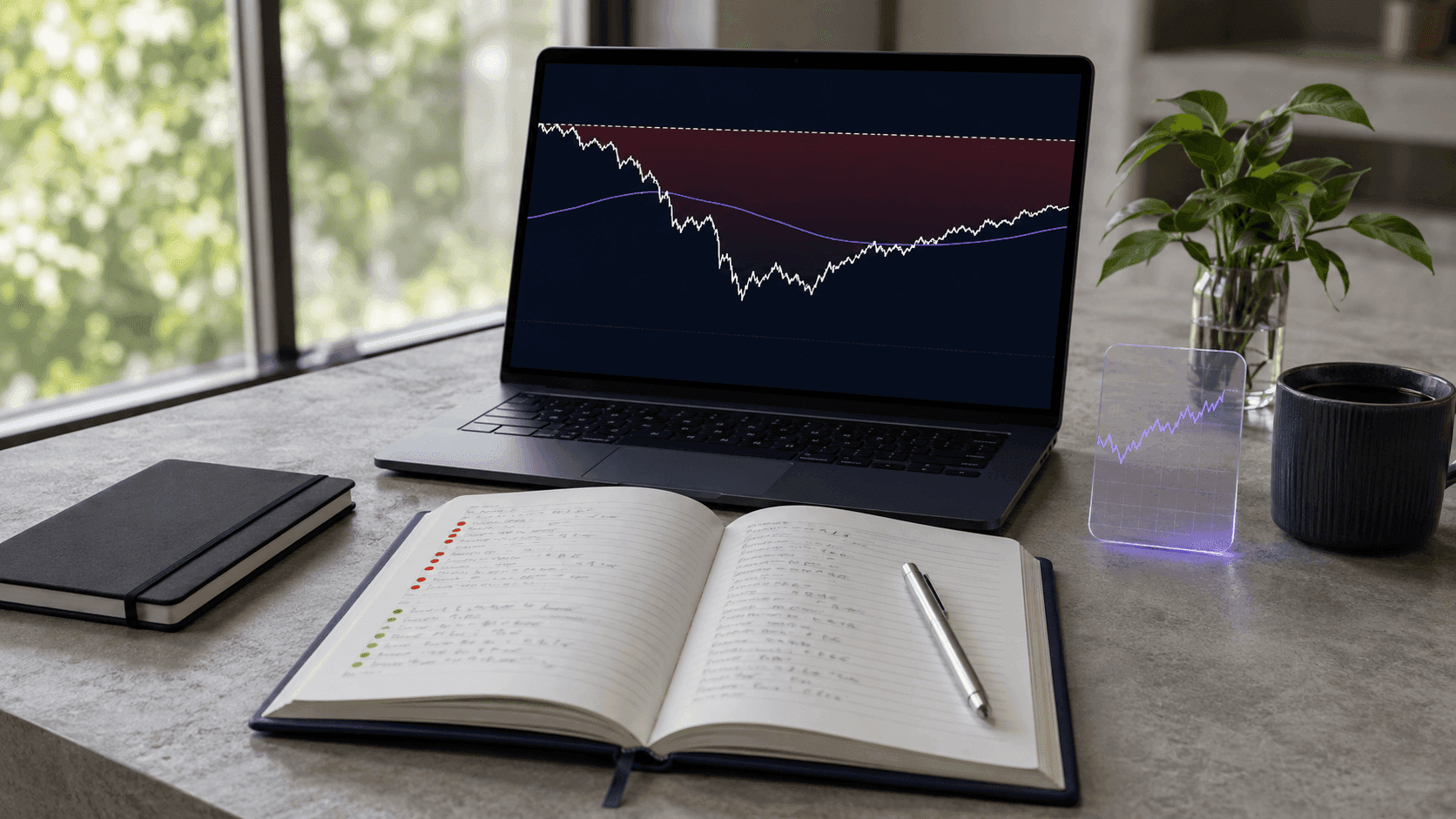
A genuinely profitable strategy still spends 68 trades under water and loses money in a third of its 40-trade windows. Simulated numbers for a normal drawdown.

Turn TradingView charts, alerts and Bar Replay into a repeatable pre-trade routine—with risk math and a journal that preserves every decision.

Most blown accounts are a sizing problem, not a strategy problem. The 1% rule, the position size formula, and worked examples for stocks, forex and crypto.
A trading journal is the fastest way to stop repeating losing trades. Learn exactly what to log, the metrics that matter, and how to review it.

You can win 40% of trades and still be profitable. Learn how win rate, risk-reward and expectancy combine — and how to compute yours.