If you drive your own car for work, the IRS rate is not something you deduct any more — it is something your employer pays you. Since 2018 a US employee cannot claim unreimbursed mileage on a tax return, and the One Big Beautiful Bill Act made that permanent. So the reimbursement your employer sends is the only money those miles will ever earn you, and whether it arrives tax-free depends on a set of rules most people have never read: the accountable plan rules in IRS Publication 463.
This guide covers what 2026 pays per mile (the rate changed on July 1), what your log and your claim must contain for the money to stay off your W-2, the deadlines that quietly decide it, and what to do when your employer pays less than the IRS rate.
Who this is for: W-2 employees who use a personal car for work — sales reps, home-care and field-service staff, nurses visiting patients, consultants, anyone told to "send in your mileage". What it does not cover: the self-employed, who deduct miles on Schedule C rather than claim them (see quarterly estimated taxes for freelancers), and company cars, which follow a separate set of personal-use rules. Readers in the UK and Canada get a short section of their own near the end.
The rateWhat 2026 pays per mile
The IRS changed the business rate in the middle of the year for the first time since 2022. Fuel prices were the reason (what $4 gas costs drivers shows how fast that bill moved): the second-half rate was announced as IR-2026-29 and published as Announcement 2026-11.
Source: CalculatorAI · calculatorai.app · IRS Notice 2026-10; IRS Announcement 2026-11 (IR-2026-29); irs.gov standard mileage rates
Two details matter for a claim. First, the July rate applies to allowances paid on or after July 1 for miles driven on or after July 1 — a March trip reimbursed in August is still a 72.5¢ trip. Second, the IRS rate is a ceiling for tax-free treatment, not a wage law: federal rules do not require your employer to pay it. Some states do require reimbursement of necessary work expenses — California (Labor Code §2802) and Illinois (820 ILCS 115/9.5) are the best known — but even there the law requires reimbursing the real cost, not a particular rate.
The rulesWhat keeps the money off your W-2
A reimbursement is tax-free only if it is paid under an accountable plan. Publication 463 lists three conditions, and all three have to hold:
- 01Business connection — the miles were driven while working for that employer. Your commute from home to your regular workplace is personal, whoever pays for it.
- 02Adequate accounting — you give your employer a record of each trip within a reasonable period: for a mileage allowance, the date, the place, the business purpose and the miles. A rate per mile at or below the federal rate counts as proof of the amount, so you do not need fuel receipts.
- 03Return of any excess — if you were advanced or paid more than you accounted for, you hand the difference back within a reasonable period.
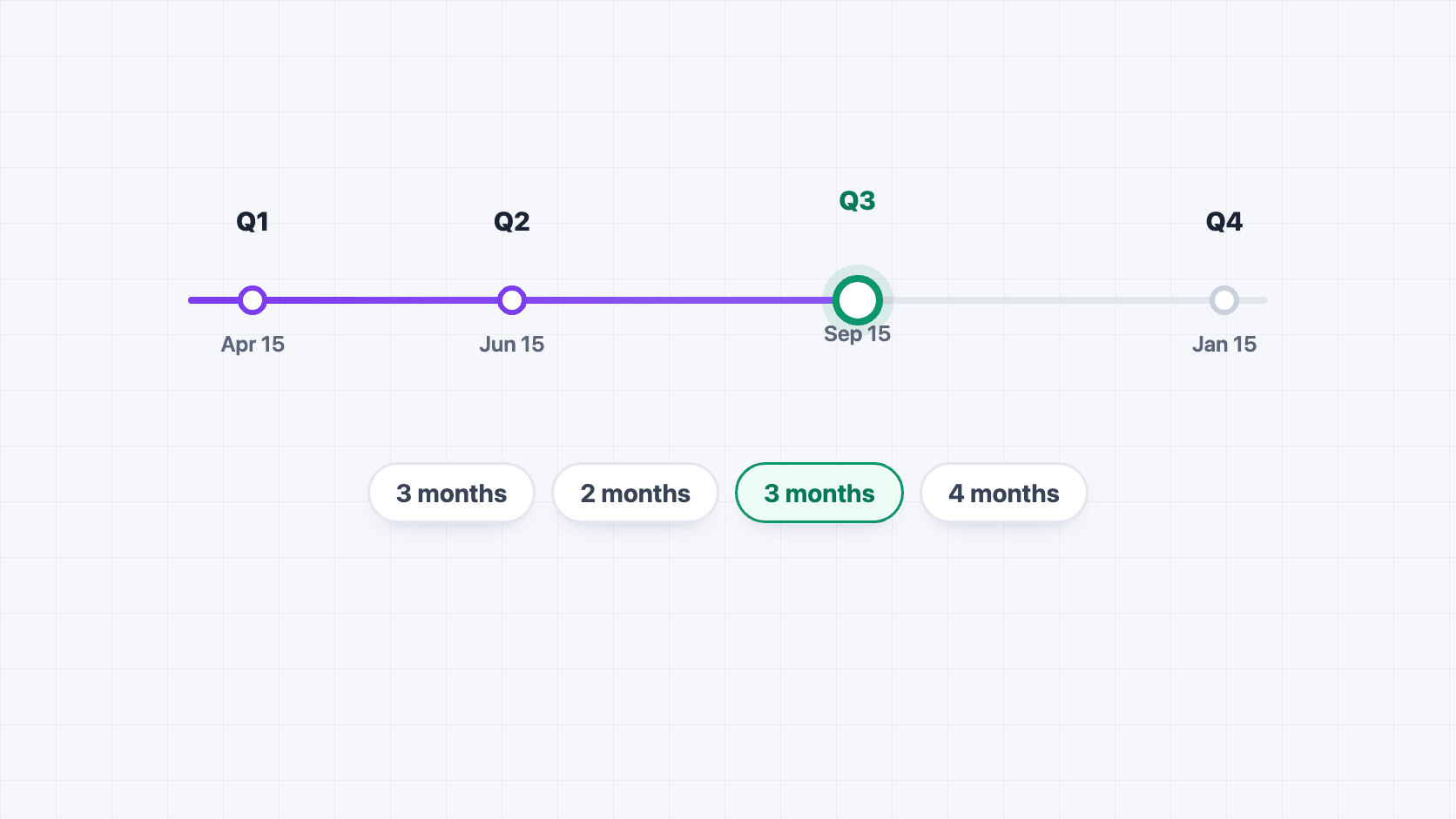
"Reasonable period" has a safe harbor, the fixed date method. Do everything inside these windows and the IRS treats it as reasonable, whatever your situation:
Received no more than 30 days before the expenseWithin 60 days after you droveWithin 120 days after you droveThere is a second safe harbor, the periodic statement method: your employer sends you a statement at least quarterly asking you to account for or return outstanding amounts, and you comply within 120 days of it. Either way, the practical rule is the same — a log you hand in once a year, from memory, is the kind of arrangement that loses the accountable-plan treatment.
When the rules are met, nothing goes in box 1 of your W-2 and nothing goes on your return. When they are not — no log, a flat monthly car allowance with no accounting, or reimbursement that is simply added to pay — the plan is non-accountable and every dollar is wages: income tax, Social Security and Medicare on your side, payroll tax on your employer's. (That payroll-tax half is the same one the new tips and overtime deductions leave untouched.)
The numbersWhat the same 1,240 miles is worth
Take a field sales rep who drives 62 client visits of 20 miles in 2026 — 620 miles before July and 620 after. Here is what changes with how the money is paid.
1,240 business miles across the July rate change
620 miles at 72.5¢ (January–June) plus 620 miles at 76¢ (July–December). Paid under an accountable plan, the full amount reaches the employee tax-free. Paid as an ordinary allowance with no accounting, it is taxed like salary — shown here at a 22% federal bracket plus 7.65% Social Security and Medicare.
60¢ a mile, accountable plan
- Paid
- $744.00
- Taxable
- $0
- Employee keeps
- $744.00
72.5¢ all year, accountable plan
- Paid
- $899.00
- Taxable
- $0
- Employee keeps
- $899.00
80¢ a mile, accountable plan
- Paid
- $992.00
- Taxable
- $71.30
- Employee keeps
- $970.86
Flat allowance, no log (non-accountable)
- Paid
- $920.70
- Taxable
- $920.70
- Employee keeps
- $647.71
IRS rates by date, accountable plan
- Paid
- $920.70
- Taxable
- $0
- Employee keeps
- $920.70
| How it is paid | Paid | Taxable | Employee keeps |
|---|---|---|---|
| 60¢ a mile, accountable plan | $744.00 | $0 | $744.00 |
| 72.5¢ all year, accountable plan | $899.00 | $0 | $899.00 |
| 80¢ a mile, accountable plan | $992.00 | $71.30 | $970.86 |
| Flat allowance, no log (non-accountable) | $920.70 | $920.70 | $647.71 |
| IRS rates by date, accountable plan | $920.70 | $0 | $920.70 |
Source: CalculatorAI · calculatorai.app · CalculatorAI model · drafts/mileage-reimbursement-employer-2026-numbers.mjs; IRS Publication 463; Notice 2026-10; Announcement 2026-11
Three things stand out. Paying above the federal rate is not a problem for the plan — only the excess over $920.70 is taxable, reported in box 1 while the federal-rate amount appears in box 12 under code L. Paying below it is legal, but the $176.70 gap at 60¢ is simply lost: a US employee has no deduction left to recover it. And the most expensive choice for both sides is the flat allowance with no log — to hand the employee the same $920.70 after tax, the employer would have to gross it up to about $1,308.74, which costs it $488.16 more than an accountable reimbursement once its own payroll tax is added.
The logWhat a claim has to contain
The IRS asks for the same record whether you are proving miles to it or to your employer: something you wrote at or near the time of the trip. For each business trip:
Date
The day you drove — it also decides the rate (before or after July 1 in 2026).
Where you went
Start and destination. "Client visit" with no place is the first thing an auditor questions.
Business purpose
Who you saw or what you did: "Delivery to Acme warehouse", "Home visit — patient 14".
Miles
Business miles for the trip; a round trip counts both ways. Odometer readings or a map distance both work.
Parking and tolls
Separate from the per-mile rate — reimbursable on top, with receipts.
No commuting
Home to your regular workplace is personal. Home to a temporary work site, or office to client, is business.
Then hand it in on a fixed rhythm — monthly is easiest — so every trip is accounted for well inside the 60-day window.
The Mileage Tracker keeps that log for you. Each trip is priced at the IRS rate in force on the day you drove, so a year that straddles July 1 comes out right without a spreadsheet formula, and the log flags trips with no purpose or destination before your manager does. When it is time to claim, Export → Employer claim builds the claim for a period — business trips only, by default only those not yet paid back — and Send to a manager for approval emails your manager a private link. They do not need an account: they see every trip and the total, and Approve, Send back with a reason, or Mark paid. When they mark it paid, the claimed trips are marked as paid back in your log, so the next claim never includes them twice. It is free, and so is the PDF version if your company wants the claim as an attachment or on its own form. If your employer uses a general expense report instead, the Expense Report generator takes the same trips as line items.
The other sideIf you run the reimbursement
For an employer, the choice of method is mostly a choice of paperwork:
- Cents per mile at or below the federal rate — the simplest accountable plan. Employees submit date, place, purpose and miles; you pay; nothing goes on the W-2.
- Above the federal rate — still workable, but the excess is wages and must be run through payroll, with the federal-rate amount in box 12, code L.
- A flat car allowance with no accounting — easy to run and the most expensive: it is fully taxable, and you pay 7.65% on top.
- FAVR (fixed and variable rate) — a fixed monthly amount for insurance and depreciation plus a per-mile amount for fuel and maintenance, set from local costs. It suits larger fleets of drivers; it has its own conditions (Rev. Proc. 2019-46), and for 2026 the standard vehicle cost it may assume is capped at $61,700.
Two more rules worth knowing: a reimbursement cannot take a minimum-wage employee's pay below the minimum wage once their own car costs are counted, and requiring a log is not bureaucracy for its own sake — it is the thing that keeps the payment tax-free for both of you.
Outside the USUK and Canada in one paragraph each
United Kingdom. HMRC's approved mileage allowance payments (AMAP) are 55p a mile for the first 10,000 business miles in a tax year from 6 April 2026 (45p before that) and 25p after, 24p for motorcycles and 20p for bicycles. Paid at or below those rates, the allowance is tax-free; above them, the excess goes through payroll. If your employer pays less, you can claim Mileage Allowance Relief on the unused balance — the US has no equivalent any more. Our 1,240 miles would be £682 at the new rate.
Canada. For 2026 the CRA's limit on tax-free per-kilometre allowances is 73¢ a kilometre for the first 5,000 km and 67¢ after (77¢ and 71¢ in the territories). The allowance must be based only on the kilometres driven for work; a flat amount is generally a taxable benefit. 1,240 miles (1,996 km) would be about C$1,457.
The Mileage Tracker has both countries' rules built in, with their own tax years and the 10,000-mile and 5,000 km steps.
MethodologyWhere these numbers come from
Rates are from IRS Notice 2026-10 (January–June) and Announcement 2026-11 / IR-2026-29 (from July 1), read on irs.gov; the accountable-plan rules and the 30/60/120-day safe harbor from IRS Publication 463, chapter 6; the FAVR vehicle cost cap from Notice 2026-10; the permanent end of the employee miscellaneous deduction from the Congressional Research Service summary of P.L. 119-21; UK rates from GOV.UK and Canadian limits from the Department of Finance's 2026 announcement. The worked example is a checked script (drafts/mileage-reimbursement-employer-2026-numbers.mjs): 62 trips of 20 miles, split evenly around July 1. Taxes on non-accountable pay use a flat 22% federal rate plus 7.65% FICA and ignore state income tax, so they understate the loss for most employees in states with an income tax.
FAQFrequently asked questions
What is the IRS mileage reimbursement rate for 2026?
72.5 cents a mile for business miles driven from January 1 to June 30, 2026, and 76 cents a mile from July 1, 2026. The rate follows the date of the trip, so a June trip reimbursed in August is still 72.5 cents.
Does my employer have to pay the IRS mileage rate?
No federal law requires it; the IRS rate is the most an employer can pay tax-free under a per-mile allowance. Some states, such as California and Illinois, require employers to reimburse necessary work expenses, and pay can never fall below the minimum wage after your car costs.
Is mileage reimbursement taxable?
Not if it is paid under an accountable plan: your miles have a business purpose, you report date, place, purpose and miles within a reasonable time, and you return any excess. Then it is not on your W-2. A flat allowance with no accounting, or reimbursement folded into pay, is taxed as wages.
Can I deduct mileage my employer did not reimburse?
Not as a US employee. Unreimbursed employee expenses were suspended from 2018 and the One Big Beautiful Bill Act made that permanent. Armed Forces reservists, qualified performing artists, fee-basis government officials and employees with impairment-related work expenses are the exceptions.
How long do I have to submit my mileage?
Under the IRS safe harbor, account for each trip within 60 days and return any excess advance within 120 days. Your employer can set a shorter deadline; claiming monthly keeps you inside either one.
Is driving from home to the office reimbursable mileage?
It can be reimbursed, but not tax-free: commuting to your regular workplace is personal, so a payment for it is wages. Driving from home to a temporary work site, or from the office to a client, is business mileage.