When you are employed, tax leaves your pay before you ever see it. When you work for yourself, nobody does that for you — and the US tax system still expects to be paid through the year, not in one lump the following April.
That is what quarterly estimated taxes are. Miss them and you can owe a penalty even if you pay every cent by the April deadline.
This is a general guide for US freelancers and sole proprietors, written to be understood rather than to be exhaustive. It is not tax advice, and it does not know your situation. Rules change and states differ — check the current IRS guidance or ask an accountant before you act on anything here.
Who must payDo you actually have to pay them?
The usual test: if you expect to owe 1,000 dollars or more in tax for the year after subtracting withholding and refundable credits, you are expected to pay estimated tax during the year.
For most freelancers that threshold arrives faster than they expect, because self-employment income carries two taxes at once:
- Income tax, at your ordinary rate. (Rental income counts too — see how to track rental income and expenses for taxes.)
- Self-employment tax — Social Security and Medicare. As an employee, you pay half and your employer pays half. Self-employed, you pay both halves, which is 15.3% on the first tranche of net earnings and 2.9% above it. You do get to deduct half of it, and it applies to roughly 92.35% of net profit rather than all of it — but the headline point stands: it is a second tax that employed people never see itemised.
Between the two, a useful rule of thumb is to set aside 25–30% of every payment that lands, before you decide what you can spend. If you have a spouse with a job, there is a second option worth knowing: they can increase their withholding to cover your liability, and you can skip estimated payments entirely.
Due datesThe 2026 due dates
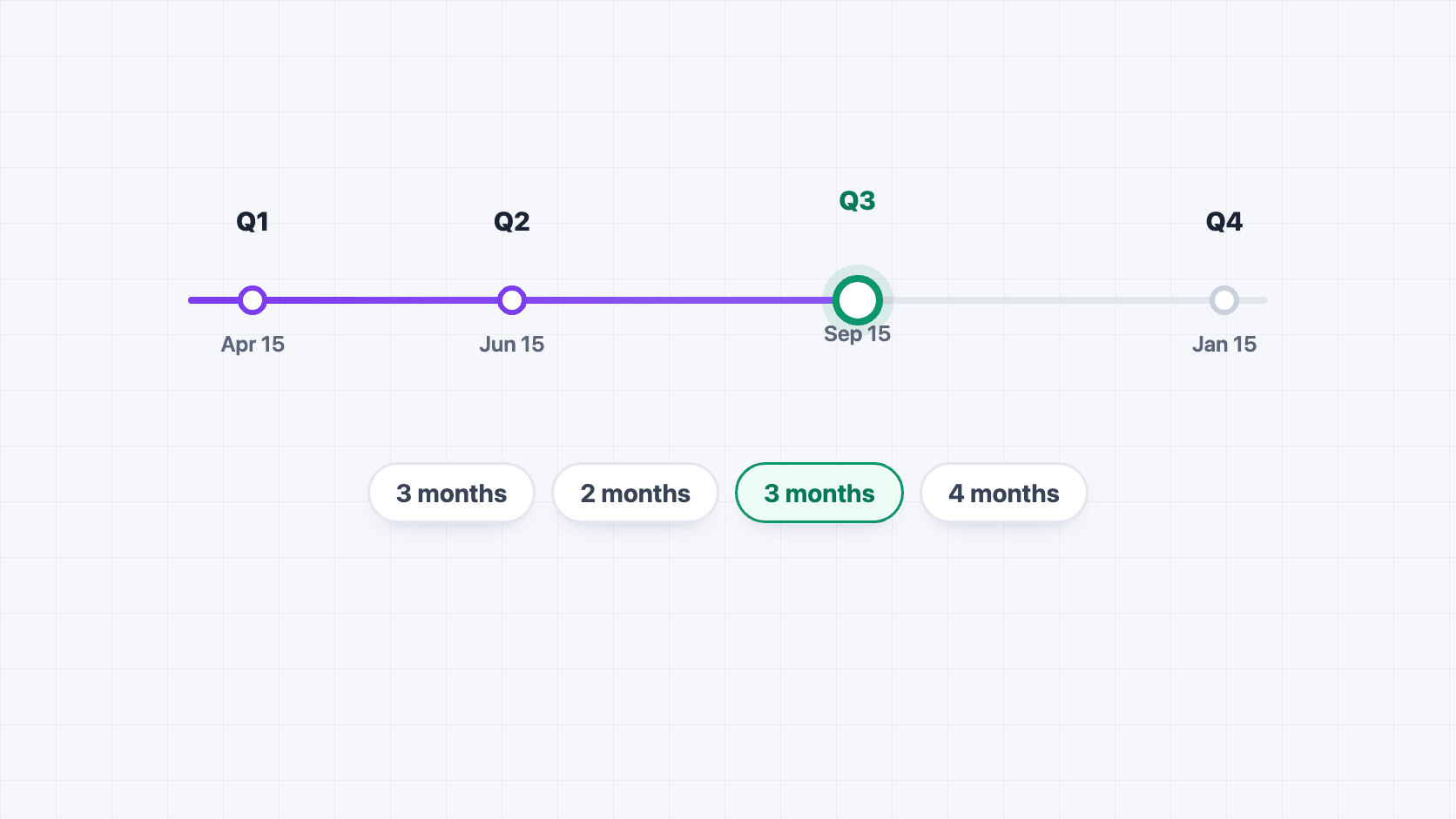
Estimated tax is due four times a year, and the quarters are not three months each — a fact that catches out most people in their first year.
- Q1 — covers January 1 to March 31, due April 15, 2026
- Q2 — covers April 1 to May 31 (two months), due June 15, 2026
- Q3 — covers June 1 to August 31 (three months), due September 15, 2026
- Q4 — covers September 1 to December 31 (four months), due January 15, 2027
If a date falls on a weekend or a federal holiday it moves to the next business day. Note the Q2 window in particular: it is two months long, and its payment is due only two months after Q1's.
The numberWorking out the number
There are two honest ways to do this, and the second is the one that keeps you out of trouble.
Method 1 — estimate the year
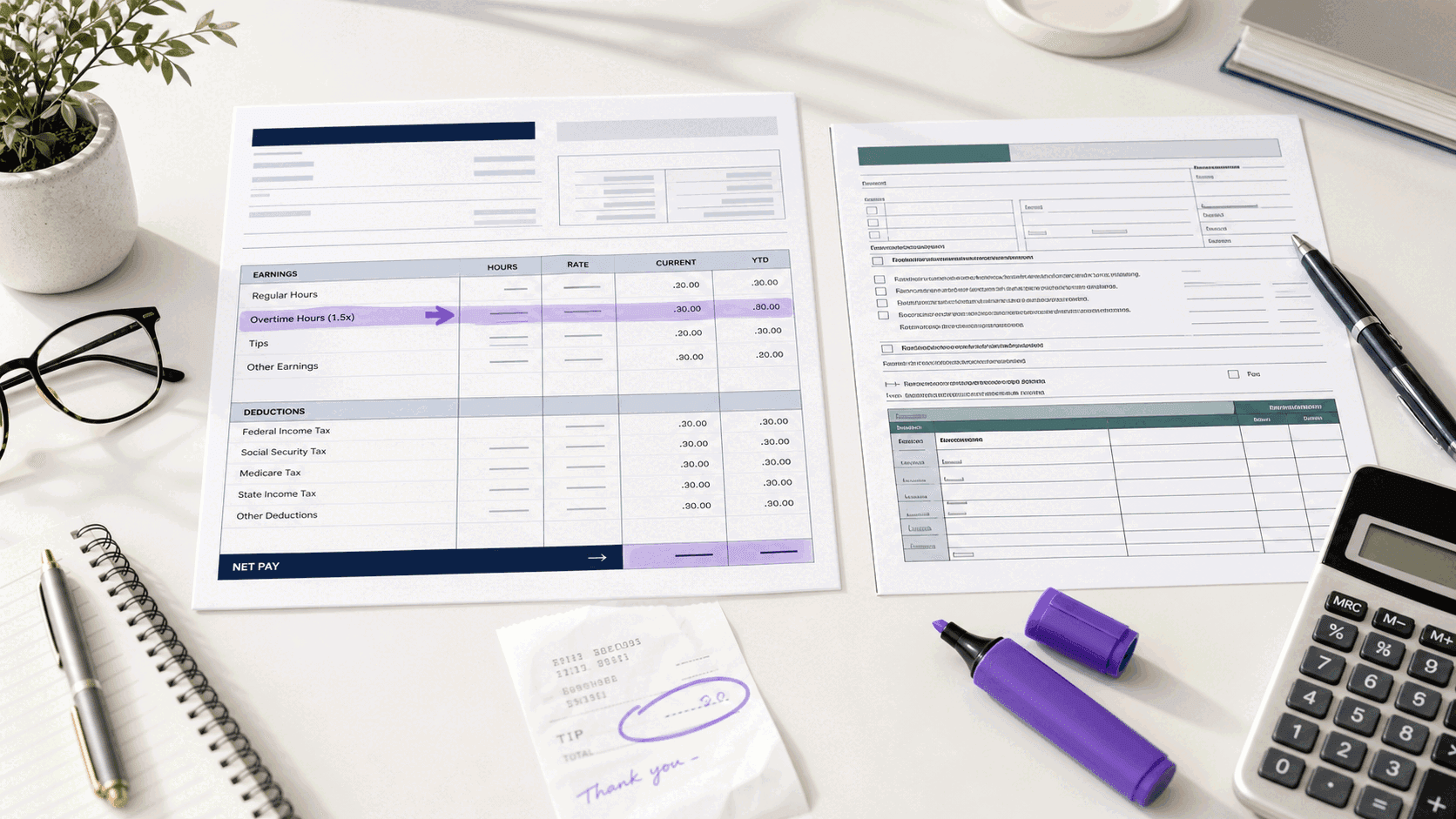
Project your full-year net profit (the Business P&L Tracker shows it live from your sales and costs), calculate income tax and self-employment tax on it, subtract any withholding, and divide by four. Accurate when your income is steady and predictable. Fragile when it is not, which for freelance work it usually is not. Employees with tips or overtime have the opposite problem — a deduction that changes nothing in their withholding, which we untangle here.
A self-employment tax calculator does this arithmetic in one pass — enter your expected net profit and it returns both taxes and the total to set aside.
Method 2 — the safe harbor
This is the important one. You avoid the underpayment penalty if you pay at least:
- 100% of last year's total tax, or
- 110% of last year's total tax if your adjusted gross income last year was over 150,000 dollars, or
- 90% of this year's actual tax, whichever suits.
Read that again, because it is the single most useful rule in this article: last year's number is a known quantity. Take the total tax from your last return, multiply by 1.0 or 1.1 as applicable, divide by four, and pay that. You may under- or over-pay against your real liability, but you are protected from the penalty either way — and you square up in April.
For anyone whose income swings month to month, the safe harbor turns an unanswerable forecasting problem into arithmetic you can do in a minute.
If your income is genuinely lumpy
There is a third path: the annualized income installment method, which lets you pay in proportion to what you actually earned in each period rather than in four equal parts. It is real relief for a business that earns most of its money in one quarter, and it requires filling in Schedule AI of Form 2210. It is more work. It is worth it if one quarter carries most of your year.
What it is based onWhat the estimate is actually built on
An estimate is only as good as the two numbers underneath it: what you brought in, and what you can legitimately deduct.
Income. This is what you collected, not what you invoiced. (Sent and paid are different states of the same document — see how to create an invoice on terms and due dates.) An invoice sent in September and paid in November is Q4 income. If you are not sure what actually landed, an invoice tracker that separates sent from paid answers it in a glance — and at year end you can export the lot rather than reading twelve months of bank statements.
Deductions. Every legitimate business expense reduces the profit you are taxed on, and freelancers routinely miss the ones that are not obviously "business": the portion of your phone and internet used for work, software subscriptions, professional insurance, mileage, the home-office deduction if you qualify. Logging costs as they occur in an expenses tracker is worth real money, because the ones you forget are the ones you pay tax on.
Paying latePaying, and what happens if you are late
Pay online through IRS Direct Pay or EFTPS, and select the correct tax year and the "estimated tax" reason — a payment applied to the wrong year is a genuinely tedious thing to unwind.
Do not forget your state. Most states with an income tax run their own estimated payment schedule with its own dates and its own portal. A freelancer who pays federal estimates perfectly and forgets the state has solved half the problem.
If you miss one, pay as soon as you can rather than waiting for the next quarter. The penalty is calculated as interest on the shortfall for the days it was outstanding, so a payment three weeks late costs a fraction of one three months late. It is a charge, not a punishment — it is not something that escalates if you simply fix it.
RoutineA routine that makes this boring
- 01Open a second account and move 25–30% of every payment into it the day it lands. Money you can see is money you will spend.
- 02Compute your safe-harbor number once a year, in January, from last year's return. Divide by four. That is your quarterly payment, decided.
- 03Diarise the four dates now — April 15, June 15, September 15, January 15 — with a reminder a week out.
- 04Keep income and expenses current as they happen, not in a panic each quarter.
- 05Revisit mid-year if your income has changed sharply. The safe harbor still protects you, but a big jump means a big April bill you would rather see coming.
Do that and quarterly tax stops being an event. It becomes a transfer you already have the money for.
FAQFrequently asked questions
Who has to pay quarterly estimated taxes?
Anyone who expects to owe 1,000 dollars or more in tax for the year after withholding and refundable credits — which covers most self-employed people, freelancers and sole proprietors. If a spouse is employed, increasing their withholding to cover your liability is a legitimate alternative to paying estimates yourself.
What are the 2026 quarterly tax due dates?
April 15, 2026 for Q1; June 15, 2026 for Q2; September 15, 2026 for Q3; and January 15, 2027 for Q4. Dates falling on a weekend or federal holiday move to the next business day. The quarters are uneven — Q2 covers two months and Q4 covers four.
How much should a freelancer set aside for taxes?
A common rule of thumb is 25–30% of each payment received, because self-employment income carries both income tax and self-employment tax (15.3% on the first tranche of net earnings, 2.9% above it). A self-employment tax calculator gives a figure specific to your profit rather than a rule of thumb.
What is the safe harbor rule for estimated taxes?
You avoid an underpayment penalty by paying at least 100% of last year's total tax — 110% if last year's adjusted gross income was over 150,000 dollars — or 90% of this year's actual tax. Because last year's number is already known, the safe harbor turns an unpredictable forecast into simple arithmetic.
What happens if you miss a quarterly tax payment?
You are charged an underpayment penalty calculated like interest on the shortfall for the period it was outstanding, so paying late costs much less than not paying. Send the payment as soon as you notice rather than rolling it into the next quarter, and consider the annualized income installment method if your income genuinely arrives unevenly.